Most of what we know about pre-colonial African history comes from European sources, oral traditions, or archaeology. But the Hausa city-state of Kano produced something rare: a written chronicle that records its history for over a millennium.
A Living Document
The Kano Chronicle isn't a single document written at one time. It's a compilation that grew over centuries, with each generation adding the history of recent rulers. The earliest sections may have been composed in the 14th century, drawing on even older oral traditions.
The chronicle begins with the founding of Kano, traditionally dated to around 999 CE. It lists each ruler, his reign length, and significant events—wars, famines, the arrival of Islam, the construction of major buildings. The later sections, from the 19th century, provide even more detail, reflecting the scholarly traditions of the Sokoto Caliphate.
What makes the chronicle remarkable is its continuity. For over 1,000 years, someone in Kano was keeping records. No other city in sub-Saharan Africa can claim such a complete written history.
The Story It Tells
The chronicle begins with the pagan kings of Kano, describing their struggles with neighboring states. It tells of Bagauda, the first king, who came from Daura and established a dynasty that would rule for centuries.
One of the most dramatic episodes is the introduction of Islam. According to the chronicle, the 14th-century ruler Yaji converted after Muslim scholars helped him defeat his enemies. The new religion spread slowly—many of Yaji's successors continued to practice traditional religion alongside Islam.
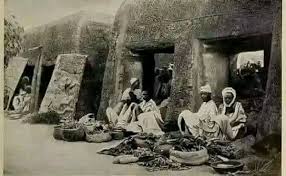
The chronicle also records the city's economic history. It mentions the Kano market, which grew to become one of West Africa's largest commercial centers. It describes trade goods—cloth, leather, salt, slaves—and the merchants who traveled from across the Sahara to buy them.
For the later period, the chronicle provides detailed accounts of the Fulani jihad and the incorporation of Kano into the Sokoto Caliphate. It describes the reforms of the new emirs and the continued importance of Kano as a center of learning and commerce.
A Window into Hausa Culture
Beyond its historical facts, the chronicle offers glimpses into Hausa culture and values. It praises rulers who were just and generous, criticizes those who were cruel or foolish. It records traditions and customs that might otherwise be lost.
One of the most charming sections describes a ruler named Muhammadu Rumfa (reigned 1463-1499), who is credited with numerous reforms. According to the chronicle, he "built the city wall, built the great mosque, built the palace, and introduced the system of government that continues to this day." Rumfa is also said to have consulted the famous scholar Al-Maghili, whose advice on governance influenced rulers across West Africa.
Preserving the Chronicle
Several copies of the Kano Chronicle exist, written in Arabic and, in later versions, Hausa in Arabic script (ajami). European scholars first learned of it in the 19th century, and it has been translated into English and other languages.
Today, the chronicle is recognized as one of the most important historical documents from sub-Saharan Africa. It provides an African perspective on African history—a perspective written by Africans themselves, not filtered through European observers.
For Nigerians, the chronicle is a precious inheritance. It connects us to our past in a direct way that few other peoples can claim. A thousand years of history, recorded by our ancestors, waiting to be read.