Long before the great empires of Ghana, Mali, and Songhai, another civilization flourished in what is now northern Nigeria. The Nok culture, dating from around 1500 BCE to 500 CE, represents West Africa's earliest known complex society.
Discovery of the Nok
In 1928, tin miners working on the Jos Plateau made an extraordinary discovery—carefully crafted terracotta heads buried deep in the earth. These weren't just any artifacts; they were remnants of a civilization that had remained hidden for millennia. Archaeologists would later name this culture "Nok" after the village where the first terracotta figures were found.
The Nok people were master sculptors, creating life-sized terracotta figures that continue to amaze art historians today. These sculptures feature distinctive characteristics: elaborate hairstyles, detailed jewelry, and most notably, strikingly stylized eyes with pierced pupils that give the figures an almost hypnotic quality.
Masters of Iron
Perhaps even more significant than their artistry was the Nok's technological prowess. They were among the first peoples in sub-Saharan Africa to master iron smelting, a revolutionary technology that would transform agriculture, warfare, and society across the continent.
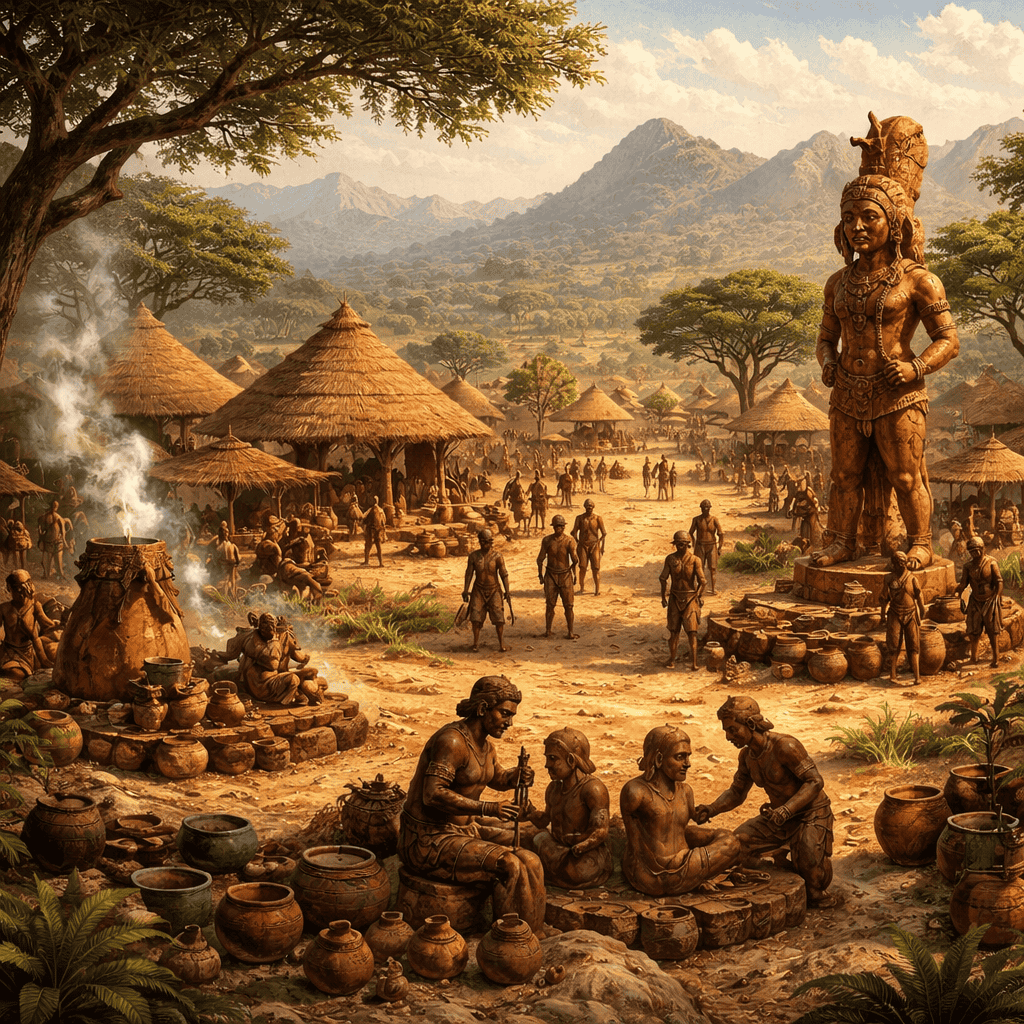
Archaeological evidence shows that Nok smiths had developed sophisticated furnaces capable of reaching temperatures exceeding 1,200°C. They produced iron tools that allowed for more efficient farming, weapons for hunting and defense, and ceremonial objects that spoke to their spiritual beliefs.
A Sophisticated Society
The Nok were not merely artists and smiths—they built a complex society with social hierarchies, trade networks, and religious practices. Their settlements stretched across an area of more than 78,000 square kilometers, connected by trade routes that exchanged iron goods, pottery, and perhaps even ideas that would influence later cultures.
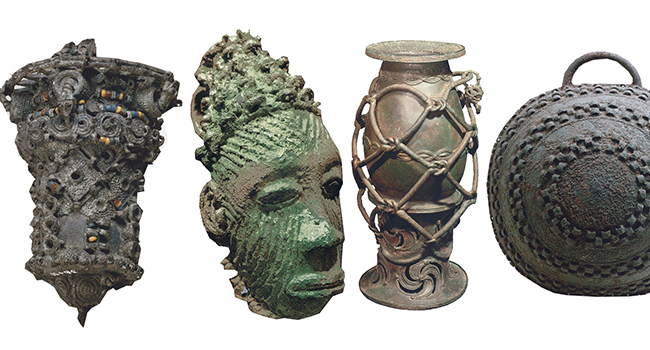
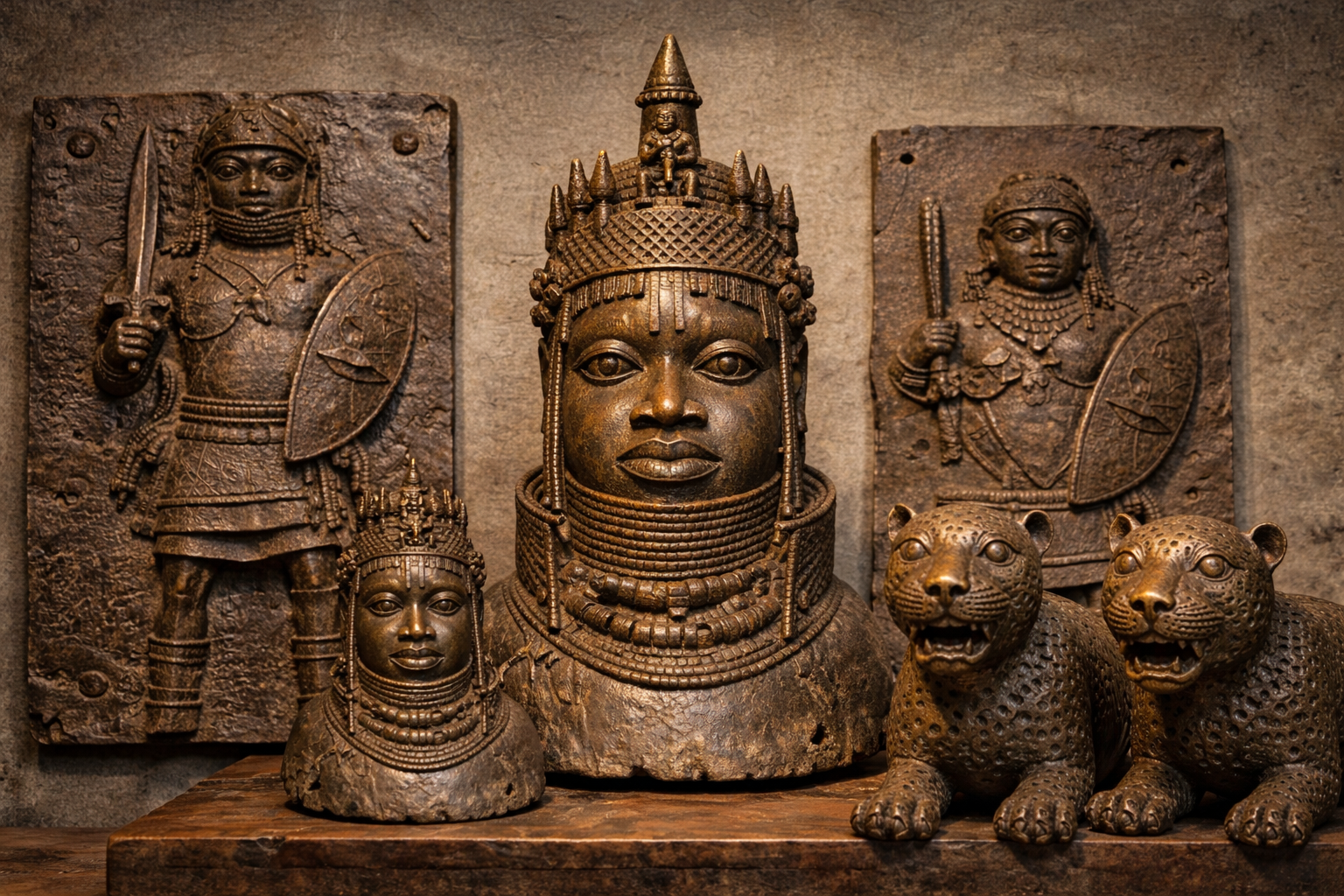
Evidence suggests the Nok had contact with other groups across West Africa, and their artistic traditions may have influenced later cultures, including the famous Ife and Benin bronzes that would emerge centuries later.
The Mystery of Their Decline
Around 500 CE, the Nok civilization gradually disappeared. Climate change, over-exploitation of resources, or shifts in trade patterns may have contributed to their decline. Unlike the empires that followed, they left behind no written records, only their art and artifacts to tell their story.
Today, Nok terracottas are among the most prized artifacts of African art, displayed in museums worldwide. But their true value lies not in their market price, but in what they reveal about the sophistication of early Nigerian societies—societies that were building complex civilizations while Europe was still emerging from its own ancient past.